Space Invaders Prototype
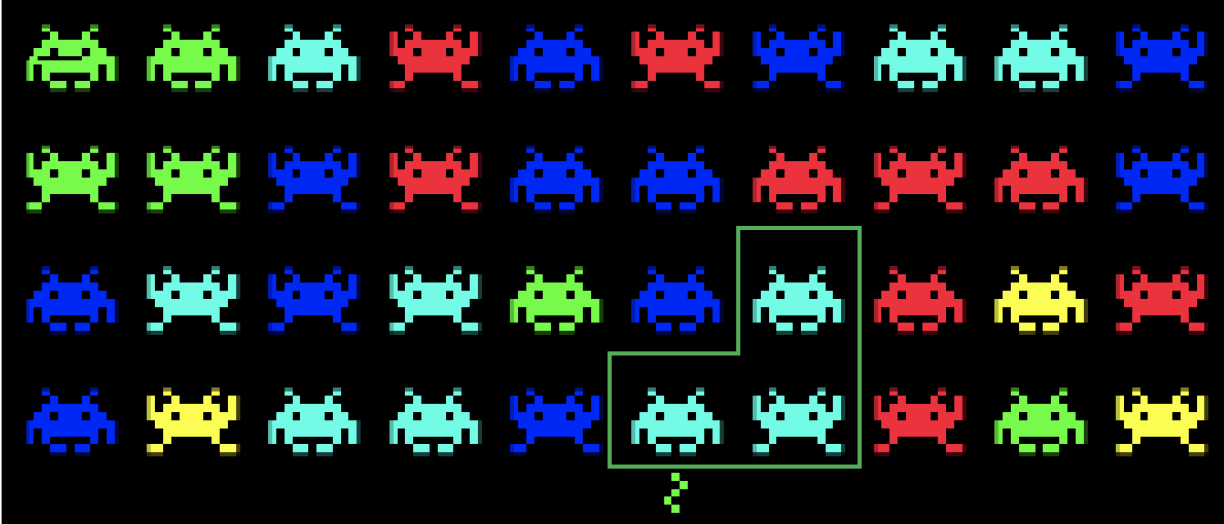
A modern reinterpretation of Space Invaders using 3D models displayed in a 2D gameplay space, featuring color linked enemy chain destruction mechanics.
- Arcade Game
- Space Invaders
- 2D Gameplay
- 3D Assets
- Chain Reaction
- Gameplay Mechanics
Goals
The main goal of this project is to recreate Space Invaders with gameplay variation and multiple technical objectives. Each enemy has a specific color. When an enemy of a particular color is destroyed, all connected enemies of the same color are also destroyed.
Leaderboards
Leaderboards display the top 10 users, sorted by score. The game supports local leaderboard storage but can be easily adapted for server-based storage. All leaderboard operations are asynchronous and responsive. Users must obtain a valid Auth Token from the Auth service before accessing leaderboards.
Services contracts
API contract details cover authentication (token issuance and validation), leaderboard read/write endpoints, error
shapes, and versioning so the in-game RestClient layer can swap between local persistence and a remote
backend without rewriting gameplay code.
Game flow
The player begins at the main menu, then plays a session. The player can submit their score to the leaderboard if it exceeds any existing scores. The game returns to the main menu after the end of each session.
Discussion points
- Architecture: The game uses a custom architecture designed to minimize reliance on
MonoBehaviour. - Game states: The game uses a state machine for transitions.
- Code flow: A single
MonoBehaviourmanages game flow. - Game systems: These create and manage game entities.
- Game views: These represent in-game actors.
- Game settings & parameters: All settings and system configurations are stored in
ScriptableObjectassets. - Services contract: A local leaderboard system with RestClient utility for handling database requests.
- Helper systems: A variety of supporting systems to manage game mechanics.